
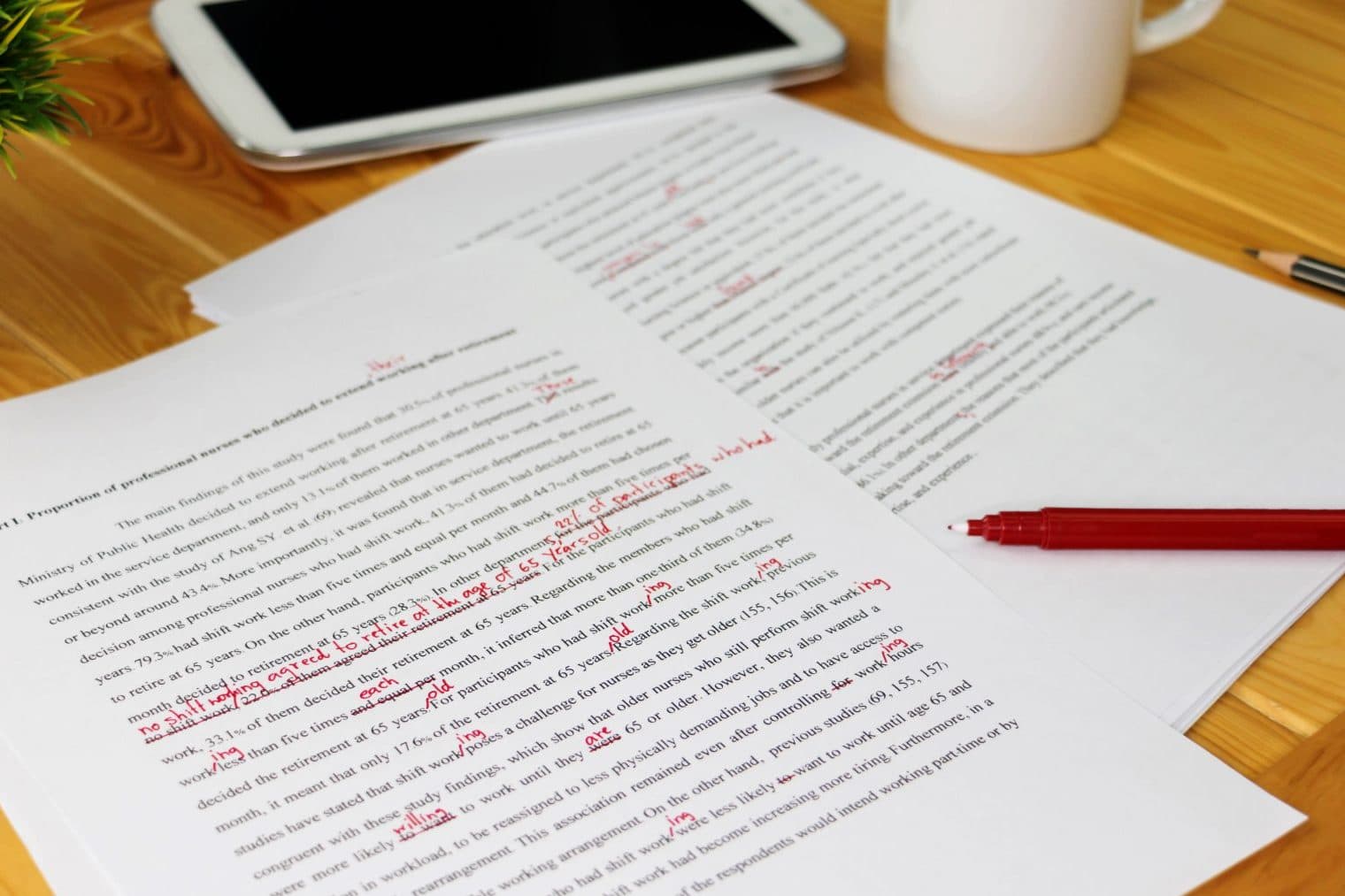
hand working on paper for proofreading
Feedback on Writing
Why is feedback important and how do you give feedback on writing? In this post you will find information about feedback, self- assessment and peer feedback, ideas on how to correct as well as a few suggestions on how to avoid burnout.
Feedback - some background information
'In teaching, feedback refers to comments or other information that learners receive concerning their success on learning tasks or tests, either from the teacher or other persons.' (Richards & Schmidt, 2010) The objective of feedback is to help the learner improve his/her performance (Ur, 2004) and give appropriate praise and suggestions (Harmer, 2013). When we talk about feedback on writing we need to consider the difference between assessment and correction.
Assessment: the learner is informed about how s/he performed.
Correction: some specific information is provided on aspects of the learner’s performance (Ur, 2004).
Correction ideas
1. Codes
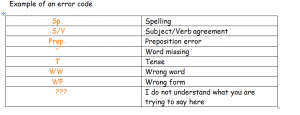
Error code:
Many teachers use an error code when checking students' writing. You collect your students' texts and instead of correcting the mistakes, you use symbols/abbreviations which correspond to language features, you use an error code. So, for example SP. stands for spelling and WW. stands for wrong word. You can make the error code yourself or use something you have found in a book.
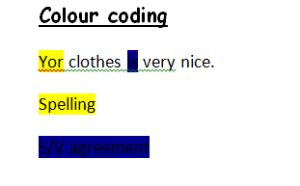
Instead of using abbreviations, you can use a highlighter pen. In this case, each colour corresponds to a type of error. This may be more suitable for children.
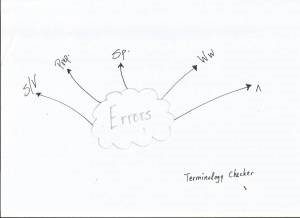
Either way, you need to make sure that your students are familiar with the error code and know what each initial or abbreviation means. Try an error code terminology checker task. What is a terminology checker? Well, you write down the key abbreviations in bubbles and definitions under the bubbles, you then project them on the overhead projector or you use handouts. Your students then have to match the abbreviation with the definition or tell you what means what.
One last thing you need to take into consideration is when to use an error code. Use it on mistakes the learners can correct. If you have a beginners class and you use the error code on, let's say a verb that should have been in the passive voice, your learner will probably be unable to correct it, so you will only frustrate him/her or make him/her feel bad.
2. Comments
Comments in the margin and at end of text
Sandwich Feedback
Reformulation
Reformulation is when you rewrite the learner's original text in a better way. Keep in mind that reformulation is a great way for the learners to see how they can produce a better text, just make sure that your 'better version' is not beyond the learners' abilities.
Online Feedback
If you are really tech savvy or if you want to be a bit more fancy, you can send your learners oral feedback or share a YouTube video. The sky is your limit, fellow teacher! Online feedback suggestions:
Google docs
YouTube- screencasts (you can upload a video of you giving feedback on your learner's work)
Vocaroo (website that allows you to record your feedback and email it to your learner)
Turnitin (plagiarism detector that also has sections for feedback)
3...
Write nothing. Instead of writing comments, have a tutorial with your learner. Have a short meeting where you discuss the strengths and weaknesses of the learner's writing. Your learner will be able to ask questions and even open up to you about any difficulties regarding his/her writing.
Individual vs. group feedback
Getting the learner involved
1. Self-assessment/ correction
Use a check list
Make a check list and ask your students to assess their work based on the items in this check list.
Journal writing
Your students can assess their performance in a writing journal. They can reflect on what they have managed so far and write down anything that makes them worry. They can even use the sandwich feedback method to assess their texts.

Error log
It is a good idea to get your learners to check the types of mistakes they make and see if there are errors that occur over and over again. If there are errors that recur:
Your learner will realise that he/she needs to address it.
You, the teacher, can include tasks, lessons that will help your learners with structures and language they are struggling with.
Rubrics/ assessment criteria
Instead of you marking your students' work based on writing assessment criteria, why not get them to look at their work and assess it based on the writing assessment criteria? These type of activities are remarkable when working with advanced learners. It gets your students to reflect on their texts and see what needs work on. I have used criteria sheets in my exam classes and my EAP classes. I strongly recommend you try this with your learners. I would not recommend it for lower level students though because they may have language barrier issues. When you first introduce writing assessment criteria to your learners, it is a good idea to use a sample. Give them a text that has been assessed based on writing criteria but do not give them the final grades. Ask them to assess it and then show them the grades/highlighted criteria. Once they familiarise themselves with the process, they will be able to apply it to their own work.
2. Peer feedback
criteria/rubrics
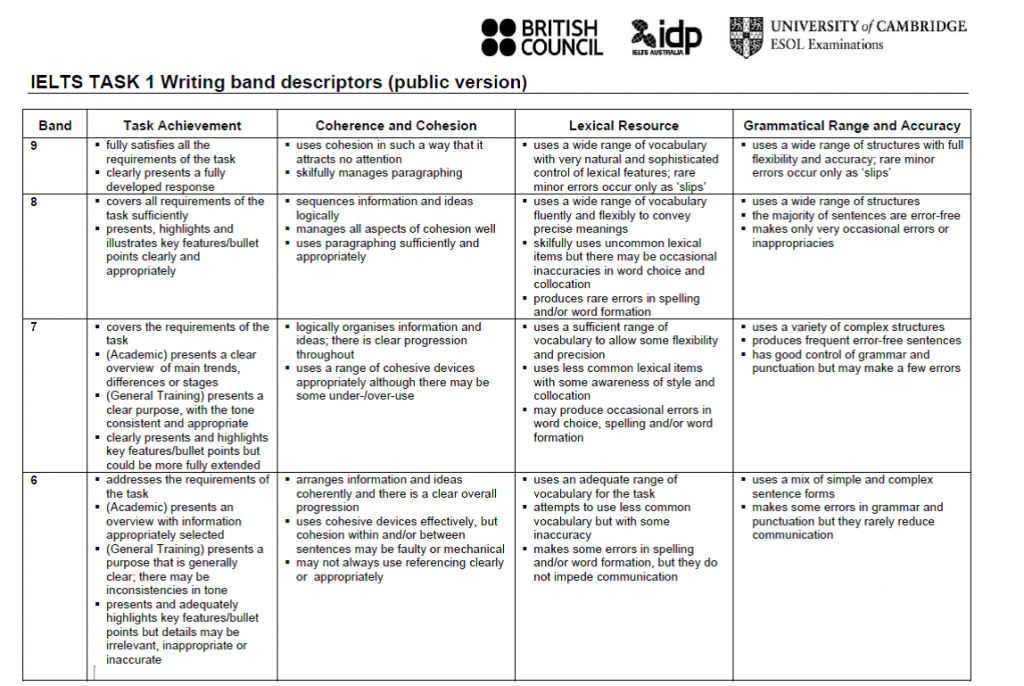
a specially designed form
How do you know your learner understands your feedback?
We all give feedback and most of the times are probably happy with the work we have done. The question to ask though is, 'How do we know that our learners are learning from our feedback?' Well, you can do two things.
Get feedback on your feedback.
Ask your learners what they think of the feedback you give them. Do they find it helpful? Is it enough? You could also make this feedback anonymous and get your students to tick boxes.
Feedback Q & A
Avoiding burnout
Feedback on writing requires a lot of time and effort and may lead to burnout. You can avoid burnout by:
selective marking
changing error codes
involving the learners.
(Harmer, 2013) Feedback on writing is very important and integral to our learners' progress. I hope you found this post helpful.
About the author
Joanna Malefaki has been teaching English for about 20 years. She is a Language and Study Skills Tutor at the University of York's International Pathway College. She has an M.Ed in TESOL and the Cambridge Delta. This post was originally published on her own blog www.myeltrambles.com.
References Harmer, J. (2013) The Practice of English Language Teaching. China: Pearson. Richards, C. J. & Schmidt, R. (2010) Longman Dictionary of Language Teaching & Applied Linguistics. Malaysia: Pearson. Ur, P. (2004) A Course in Language Teaching. Cambridge: CUP.