
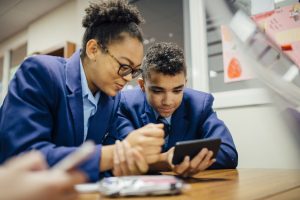
Teenage Students With Teacher In IT Class
Technology in the Classroom
The argument against
The argument against technology in the classroom generally has two parts. Firstly, it can become a crutch for students as they come to depend on it. Particularly for young learners, technology may be so integrated into students' learning experience now that they may struggle in assessments when they must perform without it.
The argument for
Studies have shown that the brain is more likely to retain information if it is memorable, so novelty will engage students and ensure they don’t forget what they are learning. Technology’s relative modernity and students' interest in it can be harnessed to aid language learning.
In 2017, there was an increase in the use of virtual reality learning, augmented reality and visual technology in general (e.g. videos), adding an extra dimension to learning. By creating digital components to complement our textbooks/courses, we can make learning a more immersive experience.
Students' differing cultural backgrounds can affect their familiarity with technology and is something to be considered as the world, and classrooms, become more diverse. With English teaching, things like Skype and messaging can be invaluable tools for communicating with people around the world and practise speaking as well as help teach culture by interacting with other cultures. Read more.
Therefore, technology can be very useful and beneficial as a classroom tool as long as it’s used as a jumping off point and not something to depend on.
How to utilise technology